
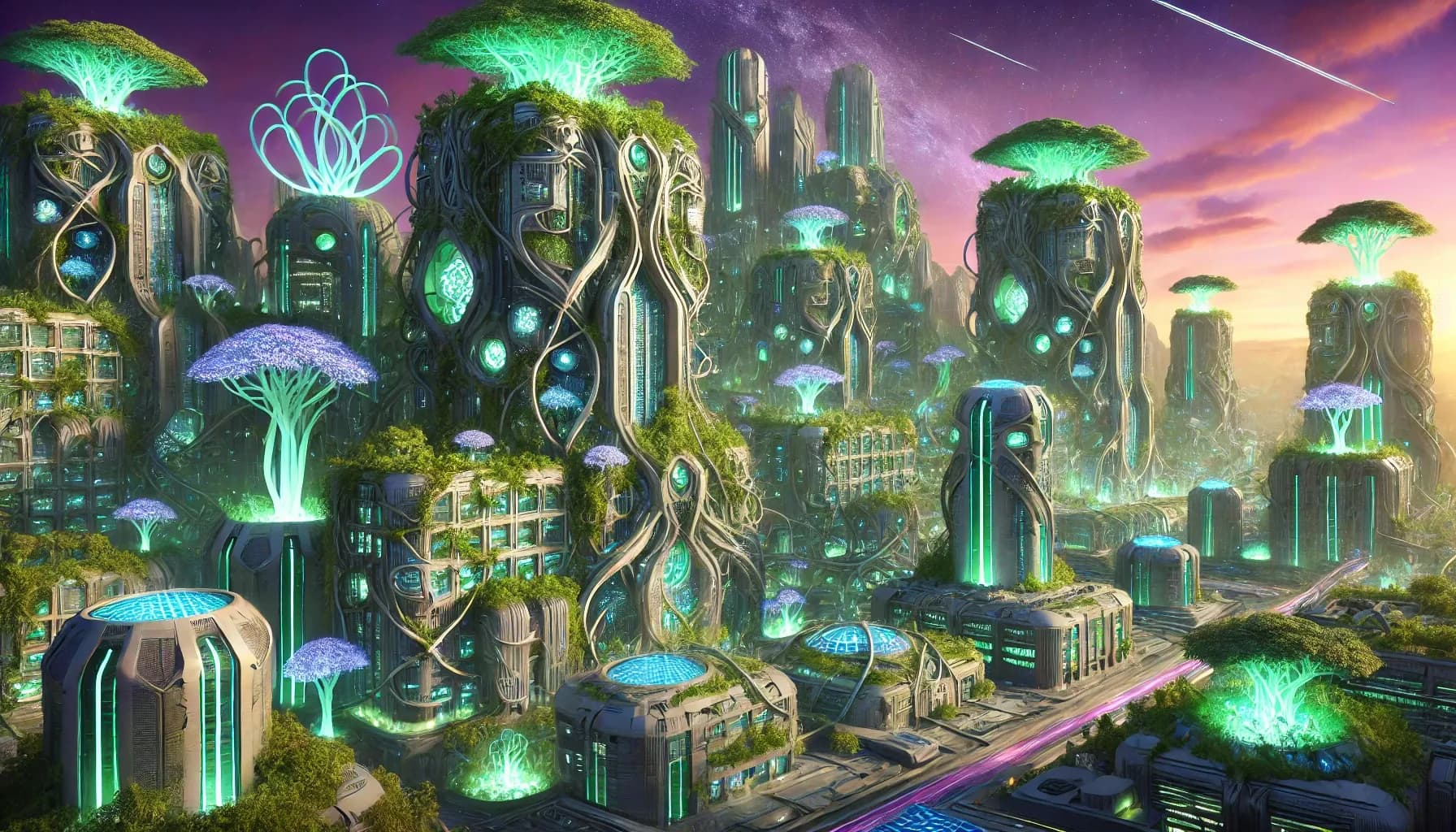
A visionary component of the Biopunk Genre; What would future cities look like? Bioremediation cities represent a revolutionary approach to urban design, where biotechnology and ecological principles merge to create sustainable and self-healing environments. In these cities, skyscrapers are not merely inert structures but living, breathing organisms. Imagine a city skyline where towering buildings are composed of engineered coral that not only provides structural integrity but also absorbs carbon dioxide and releases oxygen, effectively acting as giant air purifiers. The streets are illuminated by bioluminescent trees, which provide natural light without the need for electricity, reducing the city's carbon footprint.
Harnessing Biotechnology for a Greener Future
At the core of bioremediation cities lies advanced biotechnology that transforms urban infrastructure into living ecosystems. Buildings, parks, and public spaces are integrated with genetically engineered organisms specifically designed to perform essential environmental functions:
- Air and Water Purification: Genetically modified plants and bacteria embedded within the city's infrastructure break down pollutants, filter air, and purify water, ensuring a clean and healthy environment.
- Energy Production: Algae farms integrated into buildings produce biofuels, powering the city. Additionally, rooftops and facades may host photosynthetic surfaces that generate electricity, contributing to the city's energy grid.
- Waste Management: Bioremediation organisms decompose organic waste, reducing landfill usage and recycling nutrients back into the ecosystem. Advanced bioengineered systems could even convert waste into bioenergy or compost for urban agriculture.
- Soil Stabilization and Erosion Control: Engineered plants with deep root systems stabilize soil, preventing erosion and maintaining the structural integrity of both natural and built environments.
Designing with Nature: A Sustainable Urban Vision

Bioremediation cities are designed with nature at their core. Urban planners and architects collaborate with biologists and ecologists to create environments that not only meet human needs but also contribute positively to the planet's health. Green spaces are no longer afterthoughts but integral components of the city's fabric:
- Vertical Gardens and Green Walls: These living installations absorb pollutants and provide insulation, reducing energy consumption in buildings.
- Urban Forests and Parks: Large, interconnected green spaces create corridors for wildlife and reduce the urban heat island effect, serving as recreational areas and enhancing the quality of life for residents.
- Aquaponics and Urban Farming: In bioremediation cities, food production is localized. Aquaponic systems combine fish farming and plant cultivation in a symbiotic environment, providing fresh produce and fish while recycling water and nutrients.
Addressing Challenges: Ethical and Environmental Considerations
While the vision of bioremediation cities is inspiring, it is not without challenges. The use of genetically engineered organisms raises several ethical and environmental concerns:
- Biosafety: The introduction of GMOs into urban environments must be carefully managed to prevent unintended ecological impacts.
- Ethical Implications: Modifying the natural world at such a fundamental level raises questions about the role of humanity in nature.
- Socioeconomic Disparities: Access to bioremediation technology might not be evenly distributed, leading to inequalities between cities or within different areas of the same city.
The Broader Implications: A Model for the Future
Bioremediation cities represent a potential solution to the challenges posed by climate change, pollution, and urbanization. By integrating technology and nature, these cities offer a model for a future where human activity no longer harms the environment but actively contributes to its restoration and sustainability.
- Climate Resilience: Bioremediation cities are designed to withstand and adapt to the impacts of climate change.
- Global Impact: If scaled globally, bioremediation cities could significantly reduce humanity's ecological footprint, helping to reverse environmental degradation and restore ecosystems.
- Cultural and Social Transformation: The adoption of bioremediation technology could lead to a broader cultural shift towards sustainability.
Conclusion: A Sustainable Urban Future
Bioremediation cities offer a glimpse into a future where urban environments are not just sustainable but regenerative. By embracing biotechnology and ecological principles, these cities can become living organisms that contribute to the health of the planet. As we face the pressing challenges of climate change and environmental degradation, the vision of bioremediation cities provides a hopeful and innovative path forward—one where humanity and nature thrive together in harmony.