 16:9 · 1792×1024 · DALL-E 3
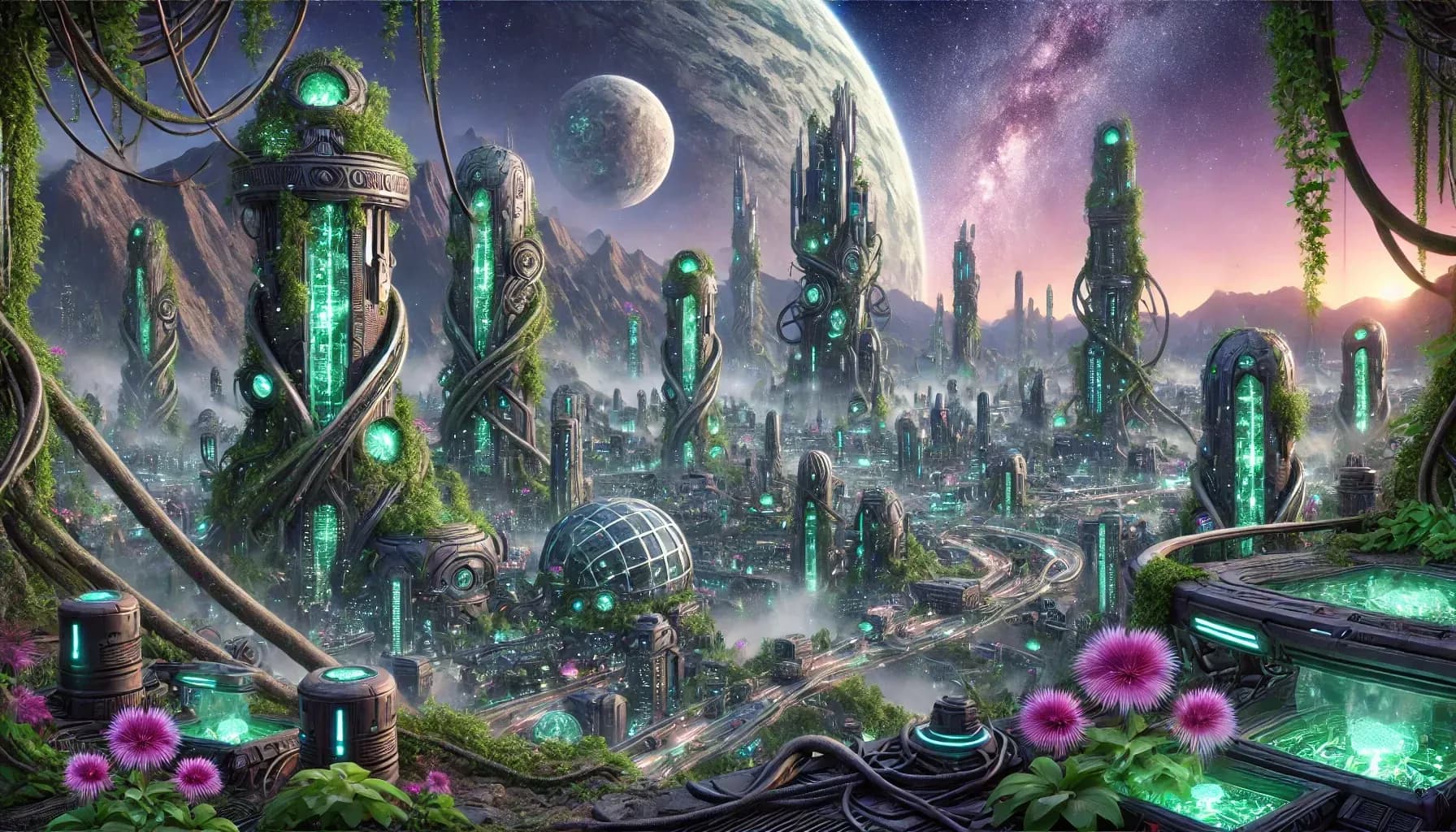
This image is a sister to the gallery's other glowing-green-pillar-tower piece. The three vertical pillar-towers are still arranged similarly. The green crystal-cores still glow at the same position. But every surface in this version has been covered in vines and pink flowers. The roads have softer edges. The buildings have moss climbing their lower walls. A second moon has appeared in the sky. The palette has shifted from the harsh green-and-silver of the earlier image to a rosier purple-pink-and-emerald.
The sister-image relationship between the two is the most interesting thing about this one. It's the same structural argument — strict repetition, centralized power-cores, master-planned uniformity — but with biological retrofit added on top. The city is still designed top-down. The architects still chose to clone a tower three times. But somewhere between the original master plan and the moment captured here, vines came in. Flowers came in. Some kind of patient biological process has spent enough time on these buildings that they no longer look freshly fabricated.
This is the visual register of architecture being colonized. Real examples exist at smaller scale — the Highway 99 viaducts in the Pacific Northwest have moss colonies that the original engineers didn't anticipate; the Soviet-era apartment blocks of Tashkent and Ashgabat have had their concrete softened by 30 years of vine and grape encroachment. The image proposes that the same process, given long enough, would happen to even the most rigidly-designed master-planned city. The fact that the central plan still shows through underneath is the argument that no plan, however top-down, ever quite gets the last word. The vines arrive eventually.
This image was imported from the original Slaacr library. The DALL-E prompt was not documented at creation time. It's pending regeneration through the Studio's SAE master template — once that happens, the prompt will appear here as a teaching artifact.