 16:9 · 1792×1024 · DALL-E 3
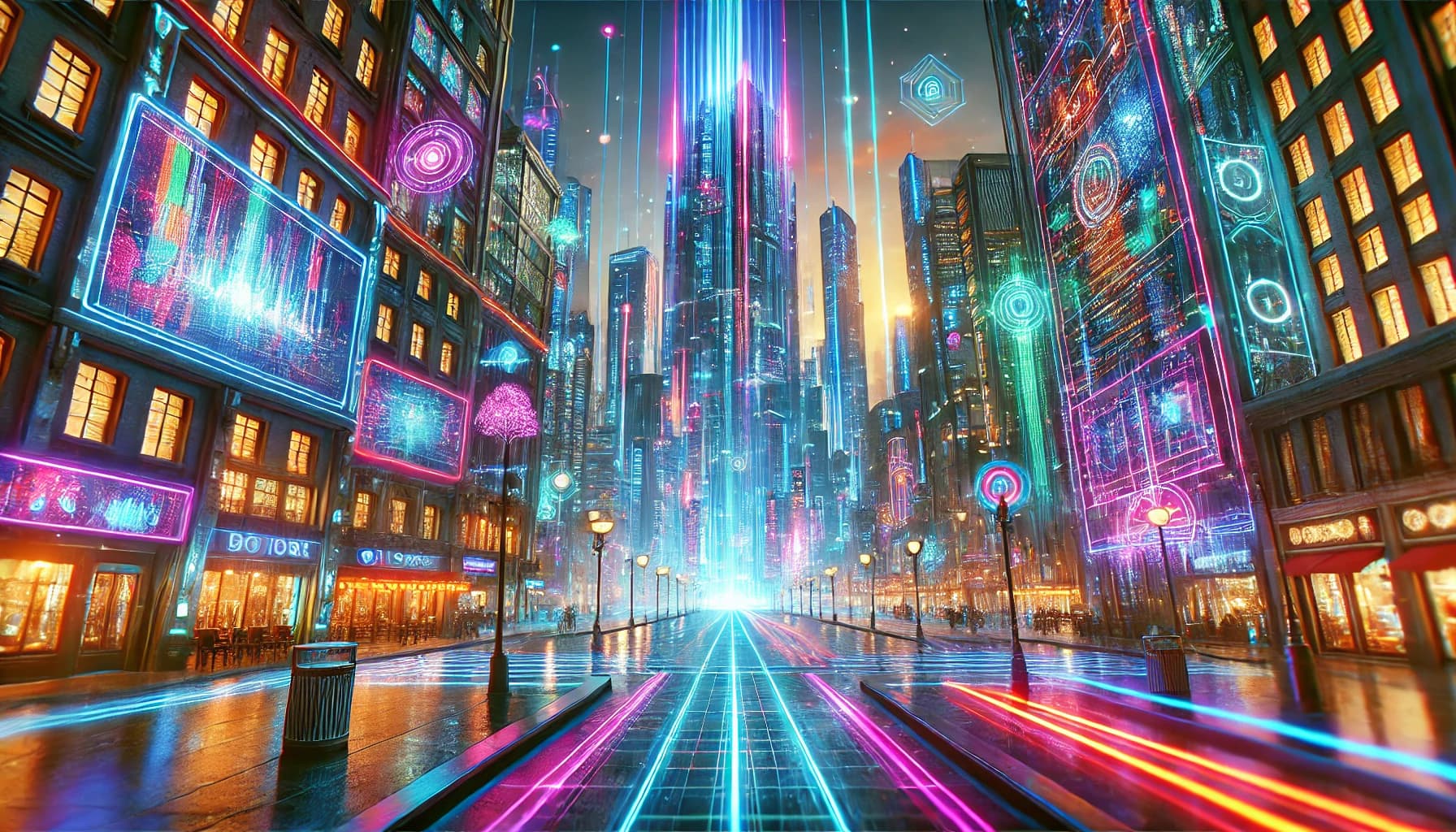
The image is constructed around a central one-point perspective. A wet street runs straight away from the viewer toward a glowing vanishing point. Both sides are lined with neon-storefronted low-rise buildings. Streetlamps hang at regular intervals. Down the road, between the lampposts, magenta and cyan light-trails stretch in horizontal bands, suggesting impossibly fast vehicles or just the road itself rendered as data. Buildings recede in the middle distance toward a central glowing tower whose top is lost in light.
The most direct visual reference is Tron Legacy (2010), specifically the scenes inside the digital grid. The film's production designer Joseph Kosinski (also credited as director) spent years developing a specific aesthetic vocabulary for that grid: cyan as the color of order, orange-magenta as the color of disruption, central perspective as a way to make the digital world legible by replacing the messy spatial logic of real cities with the clean geometry of a circuit board. The aesthetic became enormously influential — every neon-grid logo, every cyan-line product launch since 2010 owes Tron Legacy something.
The image is in that lineage but doesn't have a movie attached. It's the aesthetic without the narrative. What it argues, by being just the aesthetic, is that the visual register itself has become a shorthand for 'futuristic urban' — the way 'medieval European castle' became shorthand for fantasy after Disney. The image isn't trying to invent. It's documenting how thoroughly a single film's visual decisions have become public domain visual grammar.
This image was imported from the original Slaacr library. The DALL-E prompt was not documented at creation time. It's pending regeneration through the Studio's SAE master template — once that happens, the prompt will appear here as a teaching artifact.