 16:9 · 948×533 · DALL-E 3
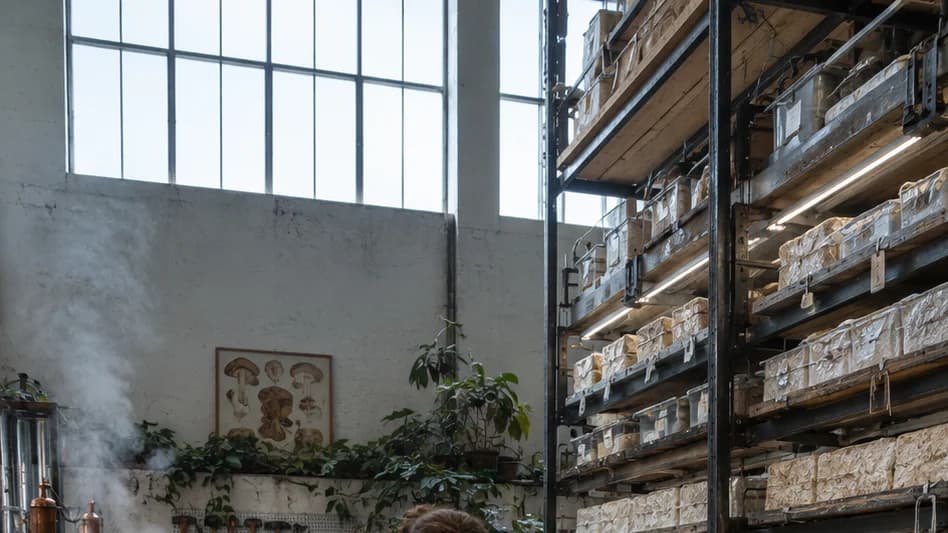
A biopunk fabrication workshop where mycelium composite is grown into chairs and furniture. The foreground holds rows of wooden moulds in the shape of seat shells — each filled with creamy-white mycelium substrate that has nearly finished growing into a continuous piece of organic material. A worker in canvas apron and dark gloves lifts a completed seat shell from one mould while another rests on the bench beside her. Behind her: floor-to-ceiling growth racks holding sealed substrate trays in pale columns, like a library of mushrooms-in-waiting. A copper still sits in the background, presumably for the sterile-water step. Late-morning light streams through tall industrial windows.
Mycelium composite manufacturing is real. Ecovative Design (founded 2007, Green Island NY) was the first to commercialize mycelium packaging; MycoWorks produces leather-substitute mycelium hides used by Hermès. The material is grown rather than manufactured: a substrate of agricultural waste is inoculated with fungal mycelium, packed into a mould, and left for several days while the mycelium binds the substrate into a solid. The resulting object is then heat-dried to kill the fungus. The image's argument is for an industrial-scale shift in how we make stuff: organic, biodegradable, structurally competent, and grown — not extruded — into shape.
A small biopunk fabrication workshop, midday, cool gray clerestory light.
Vertical composition: high windows let in cool light from above; a growth
rack of mycelium substrate trays climbs floor-to-ceiling along one wall;
in the middle ground a gloved worker lifts a finished mycelium chair seat
carefully from its wooden mould on a workbench; foreground shows long
moulds in the shape of chairs and bricks, each filled with creamy-white
mycelium composite mid-growth, surface showing characteristic fibrous
mottling. Copper kettles steaming on a side burner. Poured concrete
floor, dusted with sawdust and substrate. Tools on a pegboard. Tactile,
lab-meets-craft, real material textures. Photographic realism.
Avoid: sterile lab look; cartoonish mushroom shapes; impossible scales.

---