 16:9 · 941×529 · DALL-E 3
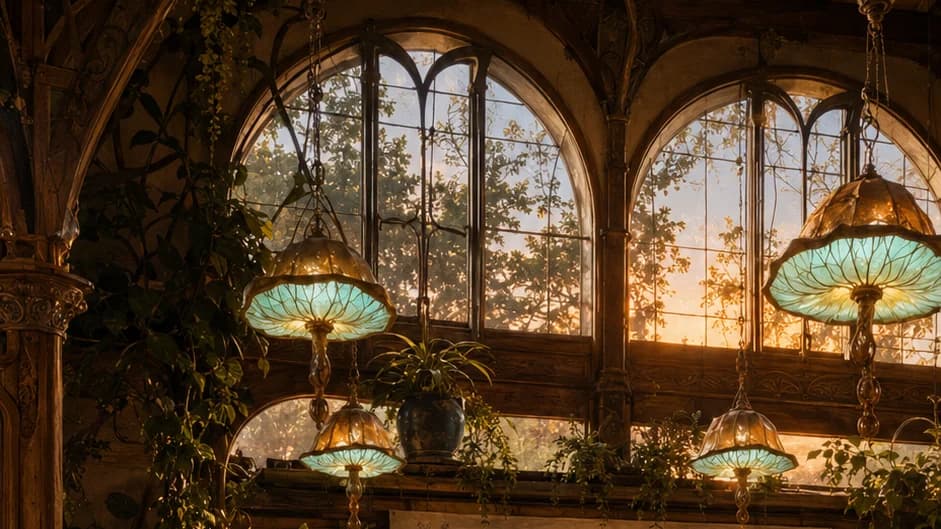
A solarpunk community land trust meeting at sunset. A residents' assembly is in session inside a vaulted hall with three tall arched windows behind the speaker — through them, the orange-pink glow of the setting sun. The elder at the front, standing at a small wooden lectern, gestures while speaking; a hand-illustrated parcel map of the neighborhood (terraces, growing zones, paths) is pinned to a wooden board to his right. Two bioluminescent pendant lamps hang overhead, their cyan-tinted shades providing supplementary light. The audience — perhaps twelve people of varied ages and dress — sit in a semicircle of hand-carved wooden chairs, facing forward, attending.
Community land trusts are real institutional architecture. The model originated in Albany, Georgia in 1969 when civil rights activists, including Slater King and Robert Swann, founded New Communities to acquire and hold land collectively for Black farmers locked out of conventional ownership. By 2020 there were over 240 active CLTs in the United States. The Dudley Street Neighborhood Initiative in Boston (founded 1984) is the largest, holding 226 affordable homes plus commercial space and parks. The image's argument is that the right venue for civic land governance is a beautiful public room — vaulted, west-facing, lit by both daylight and the future's preferred lamp technology — not a city-hall annex.
A solarpunk community hall meeting at sunset, vertical composition.
A horseshoe of hand-carved wooden chairs fills the middle of the frame;
a residents' assembly mid-discussion, an elder in their seventies
gesturing while standing, others leaning forward listening. A large
hand-illustrated parcel map of the neighborhood — terraces, growing
zones, shared paths — pinned to the back wall behind a small carved
podium. Bioluminescent mushroom-pendant lamps overhead in soft cyan-
amber. Tall arched windows admit warm dusk light from the upper third.
Plants in glazed clay pots line the walls. Solarpunk civic Art Nouveau
aesthetic, painterly realism.
Avoid: corporate boardroom feel; readable signage; town-hall
PR-photo staging.