 16:9 · 1792×1024 · DALL-E 3
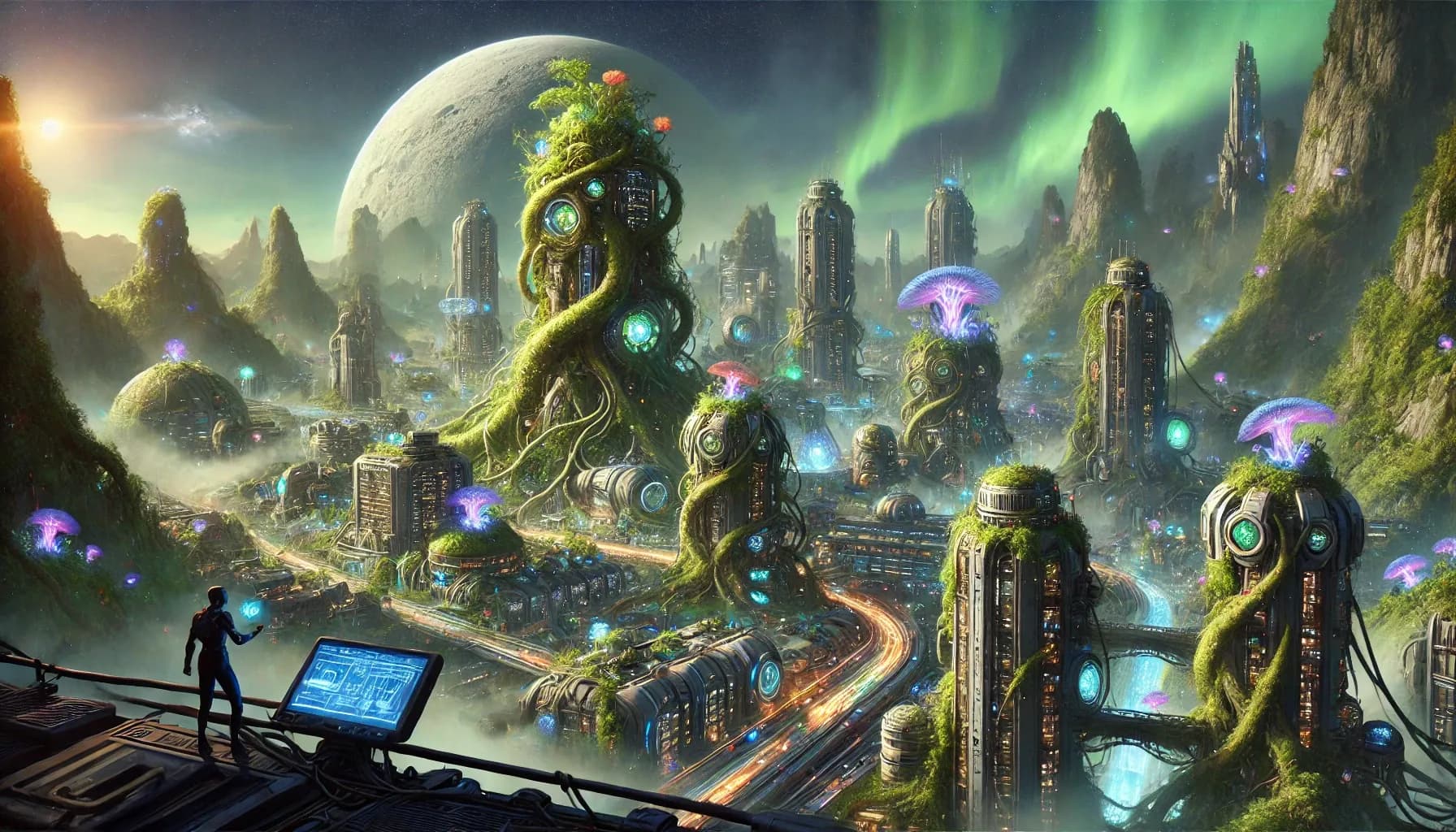
The detail at the lower-left changes the image. A small figure stands on a metal balcony, hand near a softly-glowing control panel, looking out across a vast biopunk city — vine-overgrown towers, jellyfish-shaped mushrooms hovering at building height, glowing teal data-channels weaving through the streets. The sky above the city is filled with green aurora; a large white moon hangs at the horizon. The figure with the control panel is on our side of the bridge. The viewer is, structurally, looking over their shoulder.
That positioning matters. Most speculative-future imagery either places the viewer inside the city (street-level perspective) or outside it (god's-eye landscape view). This image places the viewer over the shoulder of someone who works there. The control panel implies operations — telemetry, surveillance, system status. The figure is doing a job. The city below them is something they monitor or maintain. Whether they're a security technician, a city planner, an environmental scientist, or a researcher isn't specified — but they have a desk in this view, and the desk is mid-frame.
The over-the-shoulder framing is one of the older tricks in landscape rendering. Caspar David Friedrich used it in 'Wanderer above the Sea of Fog' (1818). Repin's various political portraits framed protagonists from behind so the viewer could share their gaze. Modern video games — particularly the 'soulslike' genre — have made the over-the-shoulder perspective the default for protagonist characters. The image is in that lineage. The biopunk city is the world. The figure with the control panel is the role the viewer is being invited to imagine occupying. The aurora is there because aurora is there.
This image was imported from the original Slaacr library. The DALL-E prompt was not documented at creation time. It's pending regeneration through the Studio's SAE master template — once that happens, the prompt will appear here as a teaching artifact.