 16:9 · 1792×1024 · DALL-E 3
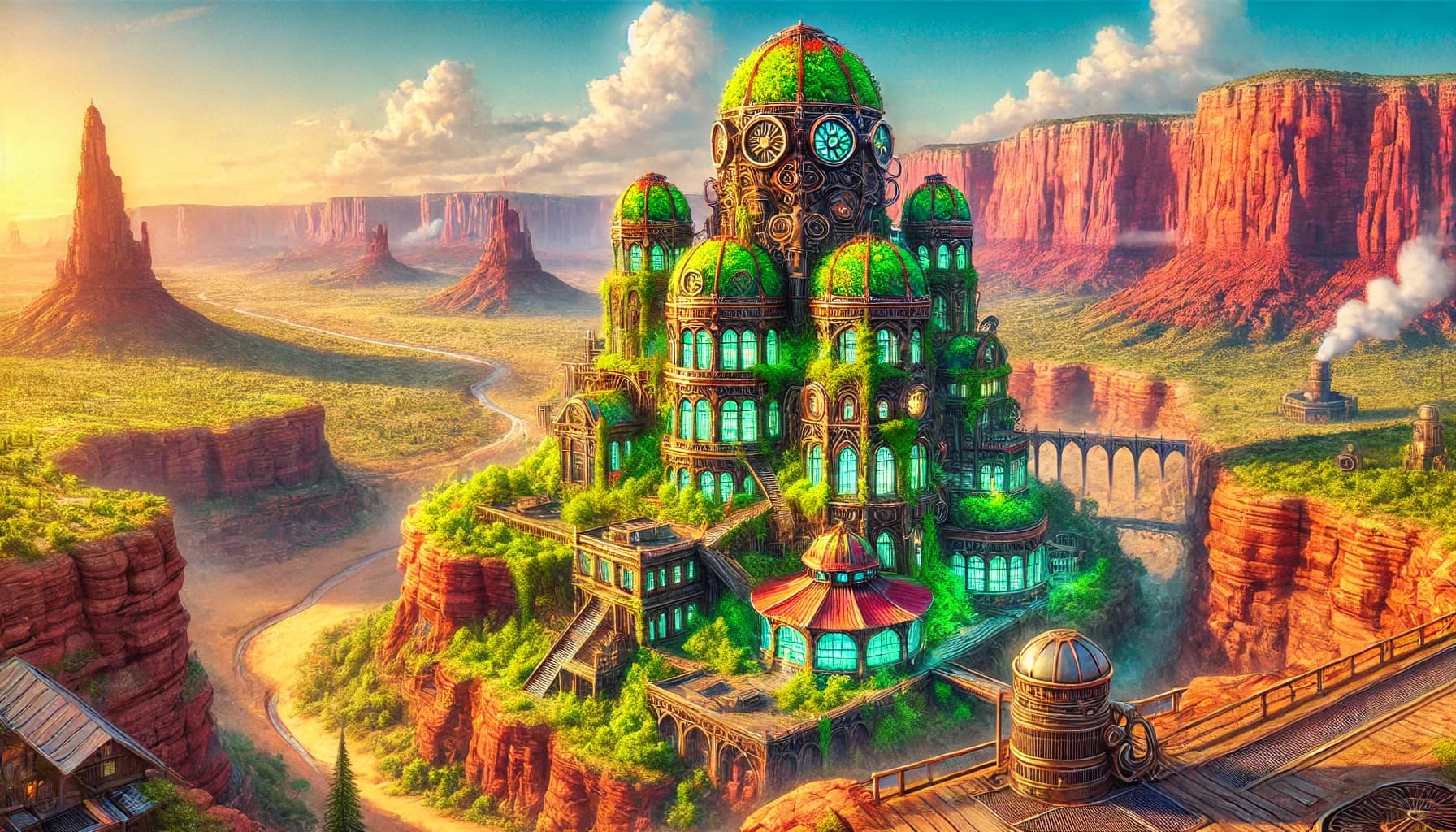
The image is small in scale. Not a city — a village. A cluster of three or four green-domed buildings, the largest topped with a brass clock-face, sits on top of a low red-sandstone mesa. The buildings are overgrown with vines and trees that grow up their sides and across the rooftops. A path winds down from the mesa to a small farmstead at the base. Red rock canyons stretch into the distance on the right. The sky is a saturated cobalt blue with stylized cumulus clouds. The whole image has the color register of a fantasy-game splash screen rather than a photograph.
The size matters because most gallery imagery in the 'steampunk desert' or 'eco-utopian' modes shows cities — sprawling, dense, multi-block. This image deliberately scales down. The whole settlement could fit on a single mesa-top. There's room for maybe fifty people. The mesa-top is connected to a tiny farm at the base, with what looks like a sheep or two. The argument the small scale makes is that not every sustainable speculation has to be civilizational. Small can also be the answer.
Real mesa-top settlements have a long history in the American Southwest. Acoma Pueblo in New Mexico has been continuously inhabited for over 800 years; it sits on a 367-foot sandstone mesa for the same reasons fortified mountain villages did in medieval Europe — defensibility, sight lines, drainage. Acoma was self-sustaining for most of its history because mesa life forces it to be. The image extrapolates: what would Acoma look like if the steampunk Victorians had gotten there first, kept the mesa logic, and added domes. The answer is small, green, and alive. Not a metropolis. A place a hundred people might call home.
This image was imported from the original Slaacr library. The DALL-E prompt was not documented at creation time. It's pending regeneration through the Studio's SAE master template — once that happens, the prompt will appear here as a teaching artifact.