
 16:9 · 941×529 · DALL-E 3
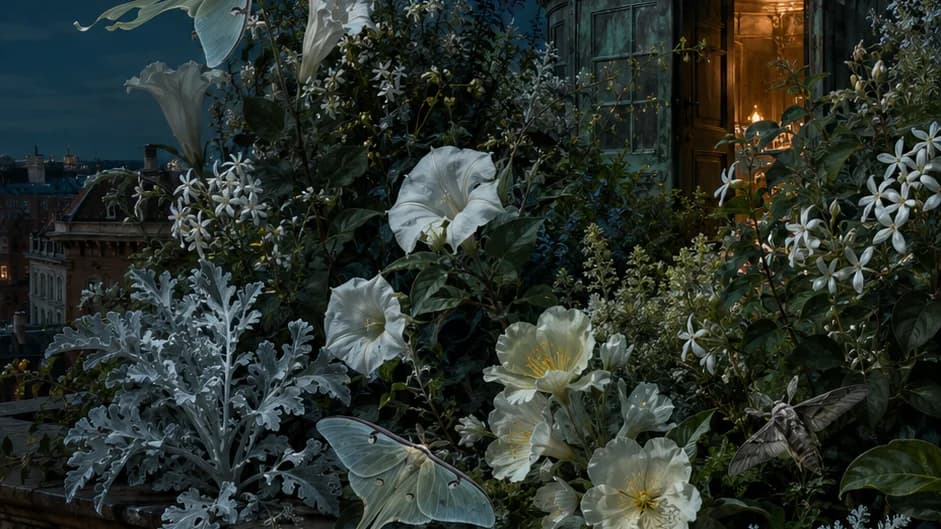
A lunarpunk rooftop pollinator garden on a converted nineteenth-century stone bank building, near 11 PM under a near-full moon. The garden is deliberately nocturnal: white moonflowers wide open, evening primrose, jasmine, silvery dusty miller. Two luna moths and a hawk moth hover among the blooms; a small brown bat is caught mid-flight overhead. A bronze observatory shed sits in the corner of the rooftop, telescope angled through an open hatch into the deep-teal sky, its small interior glowing warm amber. The old bank's terracotta cornice runs along the rooftop edge in the foreground, the letters BANK partially legible.
Night gardens for pollinators are a real conservation practice. Bats, moths, and beetles account for roughly 10% of pollination by mass globally — disproportionately important for many native plants that bloom or release scent after sundown. The Xerces Society's moonlit-garden plant lists include moonflower (Ipomoea alba), evening primrose (Oenothera), four-o'clocks, and night-blooming jasmine. The image's argument is that the right architectural surface for this kind of garden is the urban rooftop, which gets more dark sky than ground level and is structurally over-engineered for the relatively light load a garden requires.
A rooftop garden on a converted nineteenth-century stone bank building, at 11 PM under a near-full moon. The garden is a deliberately nocturnal ecosystem: white moonflowers wide open, evening primrose, jasmine, a patch of silvery dusty miller. Several large luna moths and hawk moths hover among the blooms; a small brown bat is caught mid-flight overhead. A small bronze observatory shed sits in the corner, telescope angled at the sky through an open hatch. The old bank's terracotta cornice frames the rooftop edge. Deep teals, silvers, soft moonlight whites, single warm-amber glow from the observatory door. Lunarpunk botanical realism.

Avoid: stars too bright; cartoon bats; flash-photography look.