 16:9 · 1792×1024 · DALL-E 3
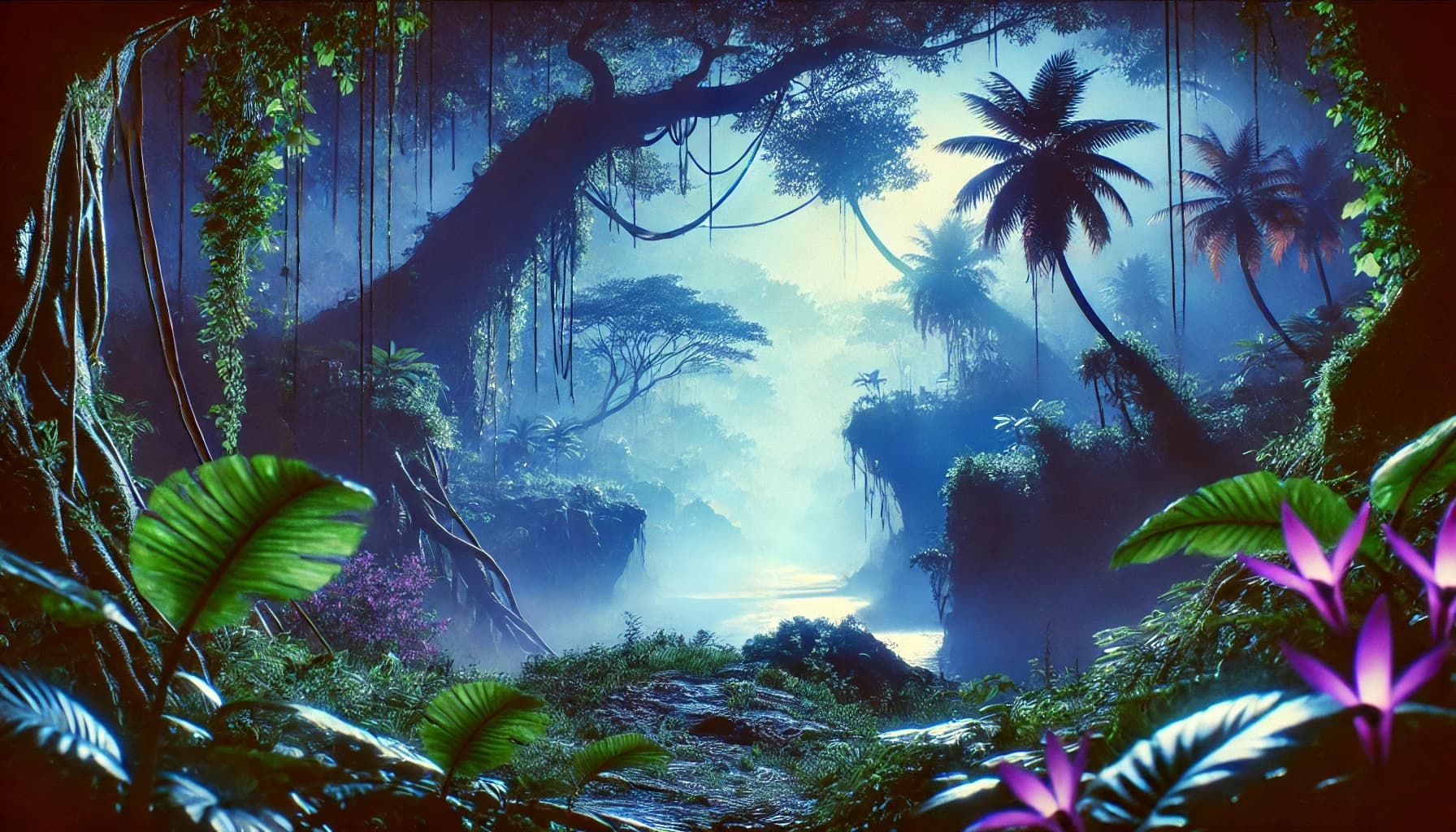
The image is composed as a tunnel. Vines, palm-fronds, and elephant-ear leaves frame the foreground in dark silhouette, opening to a misted clearing in the middle of the frame where soft cyan-blue light pools above a water surface. A magenta flower blooms at the lower-right edge. The painterly rendering is honest — visible brush-marks, slight unrealistic color saturation, the dramatic light-against-shadow contrast that reads more like a 19th-century landscape painter than a wildlife photographer.
The framing-tunnel composition is one of the older tricks in landscape painting. Caspar David Friedrich used it constantly (the figure-in-doorway shots that defined German Romanticism). Albert Bierstadt used it for Yosemite valley views. Henri Rousseau's Le Rêve (1910) and other late jungle paintings are the closest direct ancestor of this image's specific palette and density. None of those painters were trying to be photographic. They were trying to use foreground darkness to make the middle-ground light feel earned.
The image inherits that grammar without irony. The path of light leading into the mist is the destination the viewer's eye is supposed to follow. The dark vegetation is the threshold the viewer has to come through to get there. The single magenta flower at the foreground edge is the small reward for paying attention to the threshold rather than rushing through it. None of the elements are eco-fantasy in any technological sense — there's no glowing infrastructure, no holographic creatures, nothing identifiably futurist. What the image proposes is that an actual wild place, sufficiently well-painted, is fantasy enough.
This image was imported from the original Slaacr library. The DALL-E prompt was not documented at creation time. It's pending regeneration through the Studio's SAE master template — once that happens, the prompt will appear here as a teaching artifact.