 16:9 · 1792×1024 · DALL-E 3
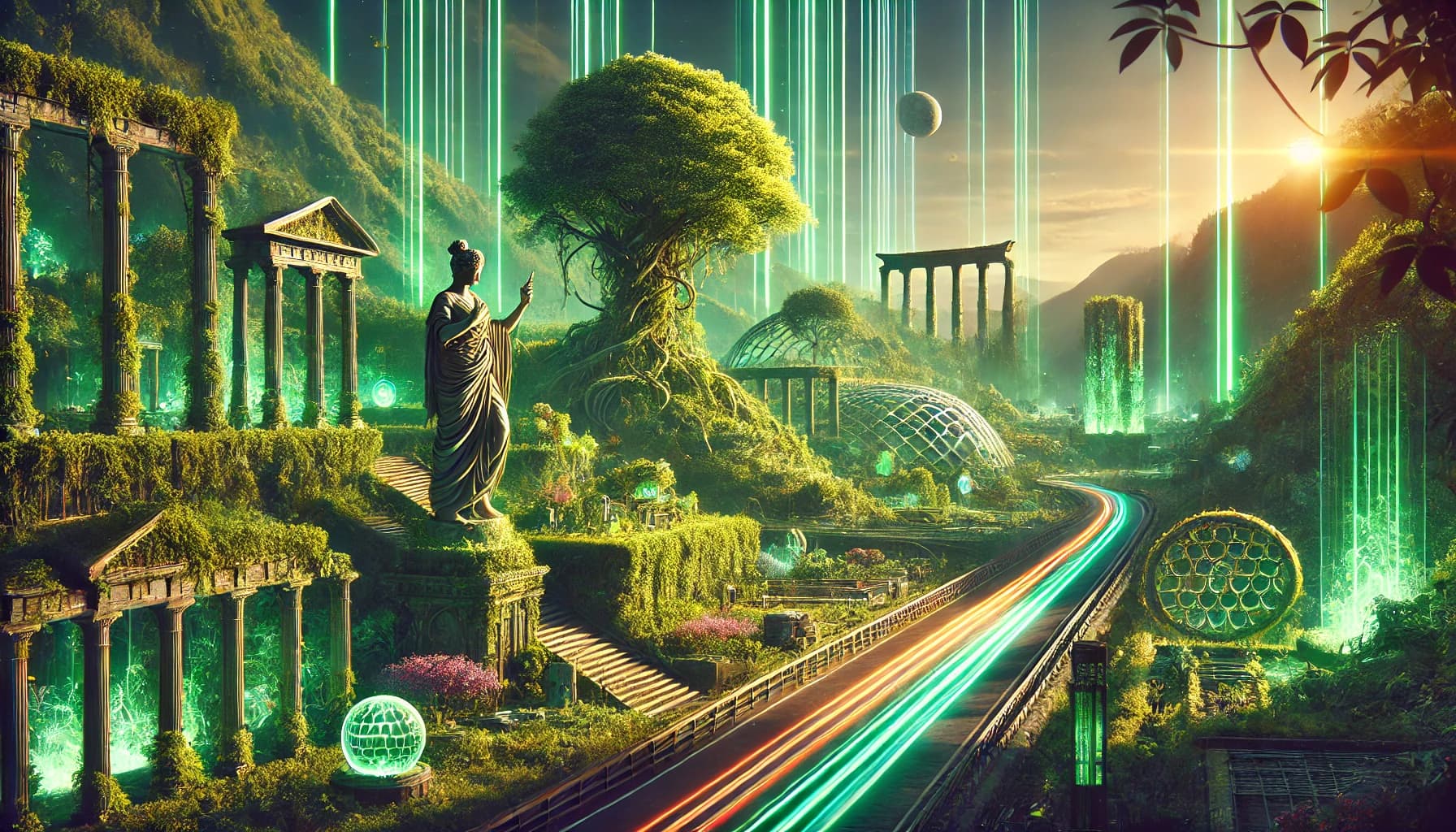
Vertical green light columns ascend from points in a Greek ruin, climbing into the sky in straight lines. A robed female statue stands on the upper terrace, holding something out at chest height — a globe, a fruit, an offering. Cracked Doric columns. Worn stone steps. A massive rainforest tree grows up out of the colonnade. A sunken highway curves through the lower foreground, with cyan light-trails suggesting traffic at speed. The sky is dim with dusk, a small moon visible.
The light columns are the editorial centerpiece. They aren't documented in any real engineering spec, but they read clearly as either matter-of-energy beams or deep-aquifer water-pumps — the visual language is closer to Stargate than to a wind farm. What anchors the image is the contrast: ancient ruins on the high ground, futuristic infrastructure cutting through the low ground, a forest happily reclaiming both at once. None of the three are dominant. None of them are losing.
This kind of compound time-staging is one of the reliable moves of solarpunk illustration. Real ruins overgrown by forests exist (Angkor Wat is the famous one; Bagan in Myanmar; Calakmul in the Yucatán). Real futuristic infrastructure built around preserved ruins exists too — the Acropolis Museum in Athens incorporates excavated foundations into its glass floor; the Roman ruins under York Minster are visible from the cathedral's undercroft. The image's argument is that civilization-scales overlap, and that the same valley can hold a temple, a highway, and a forest at once. The Doric statue holding the offering is the vote of continuity: the ritual function of the place isn't gone. It's just lit differently now.
This image was imported from the original Slaacr library. The DALL-E prompt was not documented at creation time. It's pending regeneration through the Studio's SAE master template — once that happens, the prompt will appear here as a teaching artifact.