 16:9 · 1792×1024 · DALL-E 3
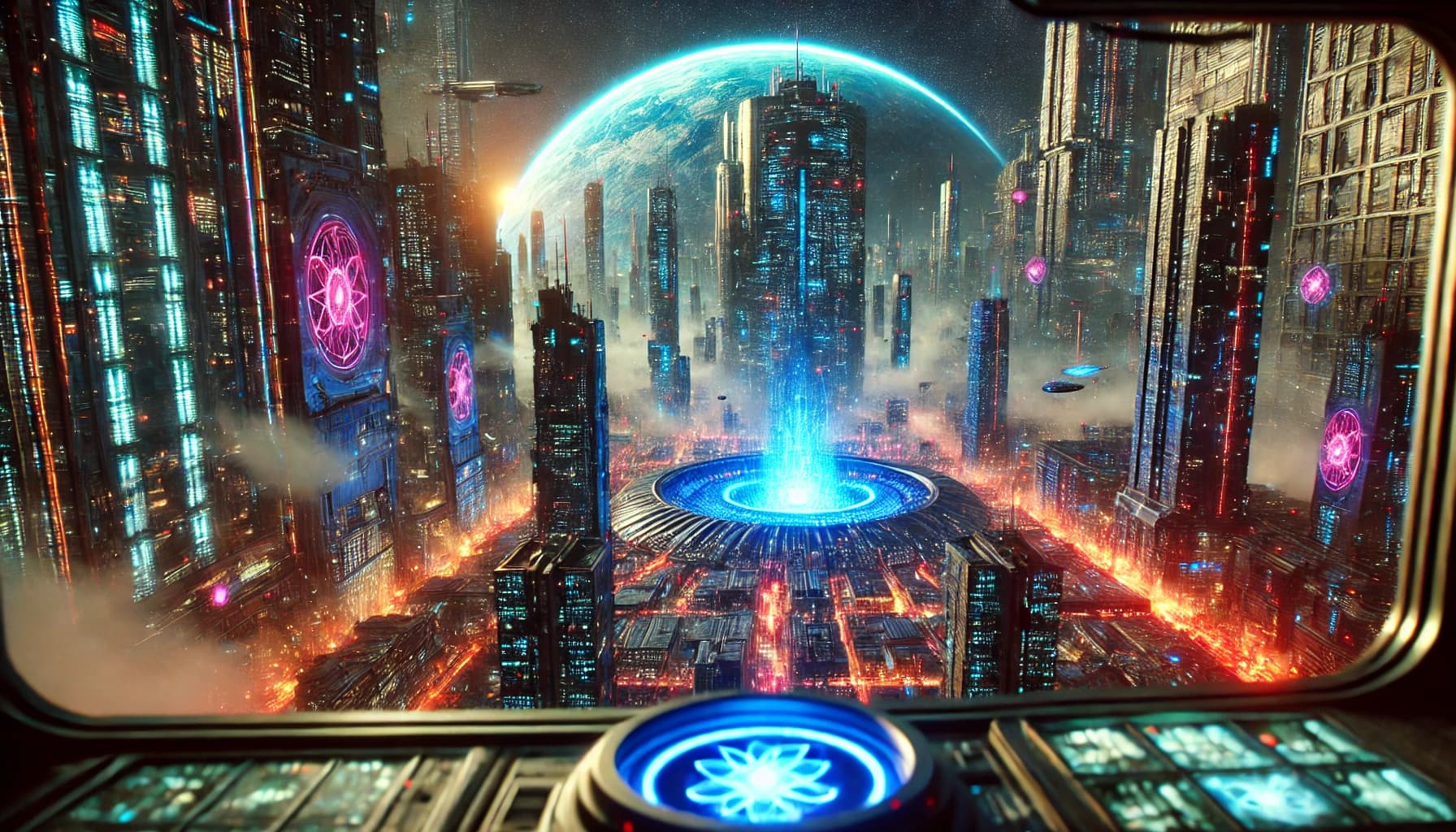
The frame of the image is itself part of the composition. The viewer is looking down at a cyberpunk city through what reads as a flying vehicle's forward windshield — the lower edge of the frame shows control surfaces, two square HUD panels, and a circular blue indicator light. Through the window, a futuristic city sprawls below. At its center, a glowing blue beam shoots upward from a circular plaza — the fusion reactor, vented as a geyser. Pink atom-symbol holograms float above two of the further buildings. A massive moon hangs over the horizon.
The POV-from-vehicle framing is a meaningful narrative choice. It signals that this isn't a city the viewer lives in; this is a city the viewer is approaching. Both Blade Runner films open with similar establishing shots — flying-vehicle approach to a glowing future Los Angeles. The cinematic shorthand is well-established: from the air, with the cockpit visible, signals 'this is a journey.' The viewer is a visitor. This is the first time they've seen the place.
What the city looks like from the air is more interesting than what most cyberpunk renders show. Most cyberpunk imagery is street-level, because that's where the genre was set in the 1980s. Aerial cyberpunk is rarer — Ghost in the Shell got close, Cowboy Bebop occasionally tried. The advantage of the aerial view is that you can see the infrastructure. The fusion reactor's central placement is visible only from up here. From street level, the city's energy source would be obscured by buildings. From the cockpit, it's the first thing you see. That's an honest piece of editorial framing.
This image was imported from the original Slaacr library. The DALL-E prompt was not documented at creation time. It's pending regeneration through the Studio's SAE master template — once that happens, the prompt will appear here as a teaching artifact.