 16:9 · 1792×1024 · DALL-E 3
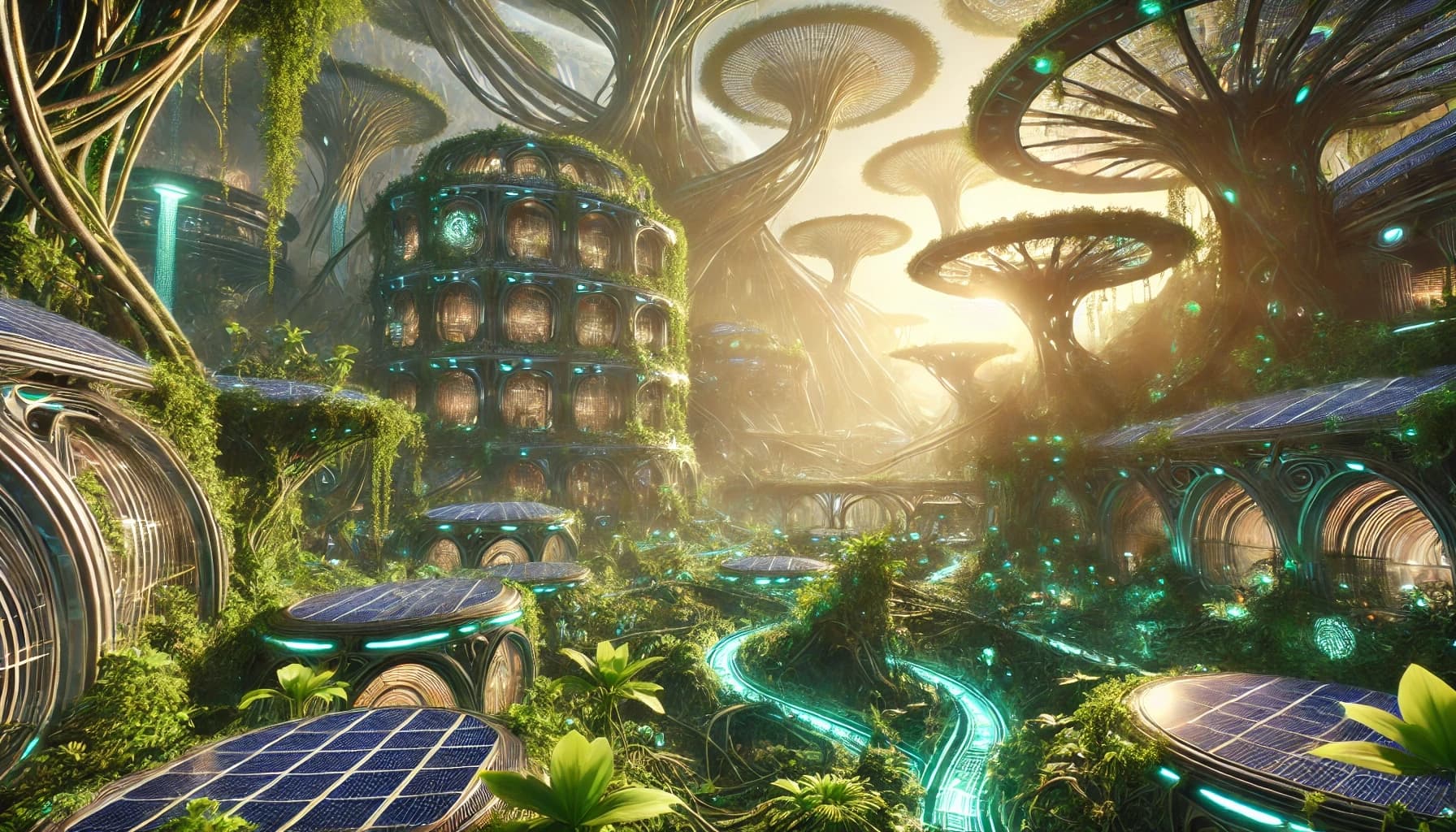
What's strange about this image is the way the technology and the biology have been woven together at the visual level. Curved low-rise buildings — domed, terraced, with rounded windows — sit at the foreground. Above them, massive mushroom-tree organisms rise into the sky, partly biological canopy, partly architectural infrastructure. Cyan-glowing vein-like channels weave through everything: through the path on the ground, up the sides of the buildings, into the canopy of the larger trees. Smaller cyan-lit fungal forms grow along the ground level. Solar panels frame the foreground at left and right.
The visual ancestor is James Cameron's Pandora (Avatar, 2009) more than any solarpunk illustrator. Pandora's central editorial conceit was that the planet's biology was networked — the famous 'Tree of Souls' and the bioluminescent forest floor were the visual evidence that information flowed through the planet's living tissue the way information flows through a fiber-optic cable. The image in this entry takes the same idea and applies it to a settlement: the cyan veins are the same logic, scaled to architecture rather than wilderness.
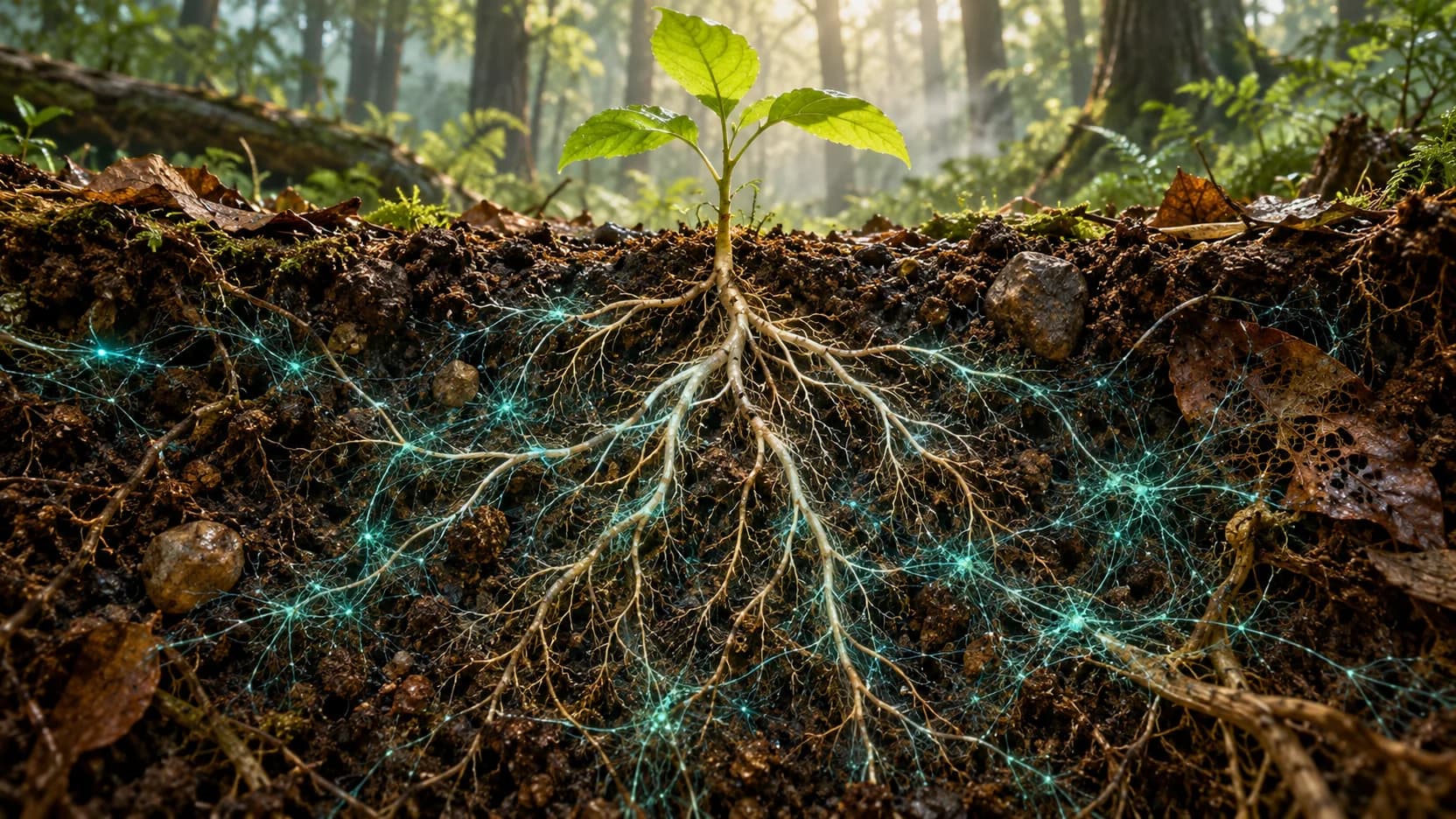
Real-world mycorrhizal networks (the ones Suzanne Simard documented at UBC) do something biologically similar at much slower speeds — fungi that connect tree roots and let trees share nutrients and chemical signals. The image is essentially a speculation: what if a settler civilization had figured out how to integrate its infrastructure into an existing mycorrhizal-style network rather than fighting it? The buildings sit on the path. The cyan veins run through both. The mushroom-trees above are the larger network the settlement has decided to be part of. The solar panels are the human concession. The rest is the network.
This image was imported from the original Slaacr library. The DALL-E prompt was not documented at creation time. It's pending regeneration through the Studio's SAE master template — once that happens, the prompt will appear here as a teaching artifact.