 16:9 · 1792×1024 · DALL-E 3
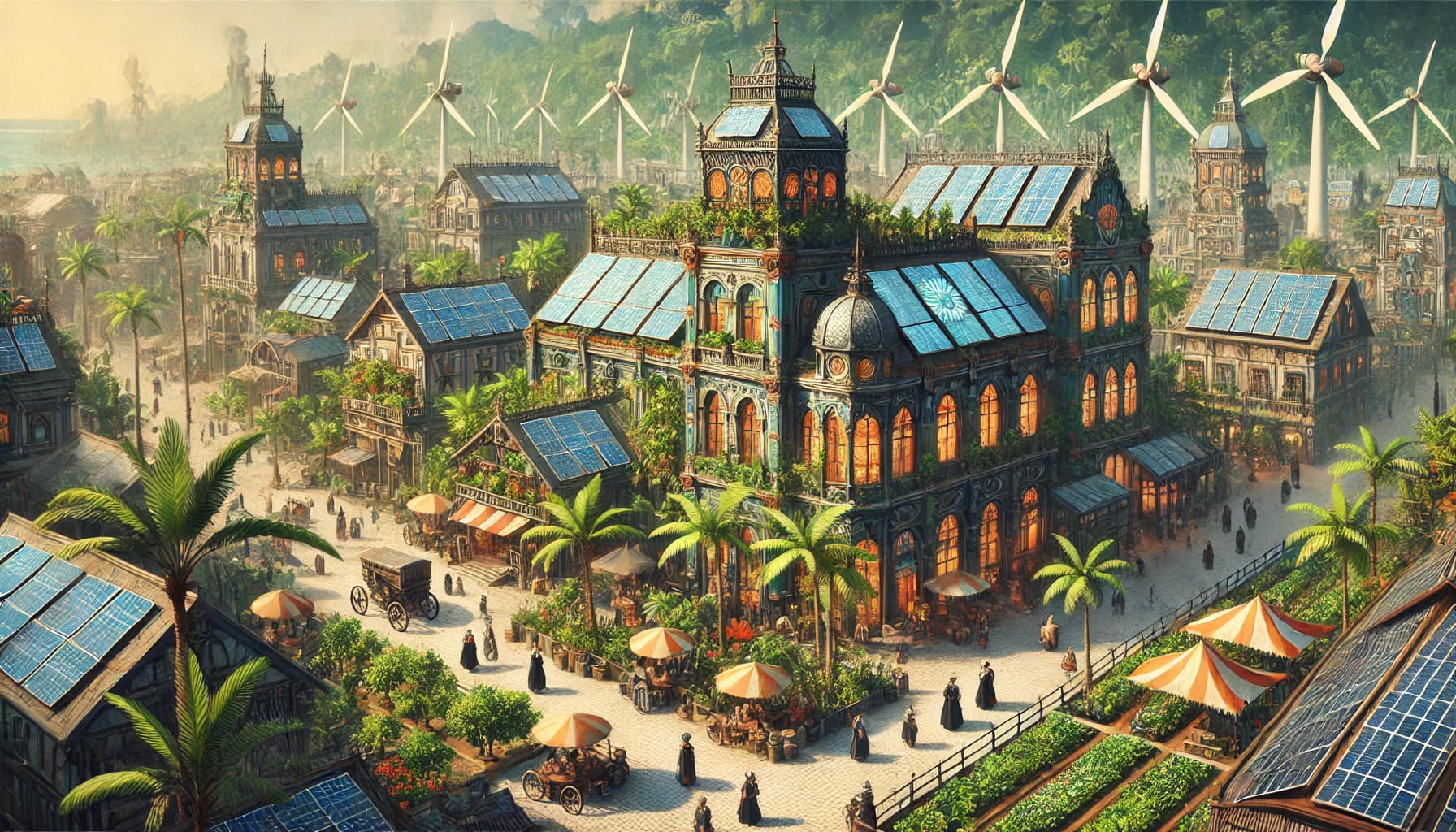
The architecture in this image is unambiguously colonial-tropical — the kind of building you find in Goa, Pondicherry, Penang, or 1900s Singapore, before the tropical metropolis became a steel-and-glass city. Three-story masonry buildings with arched windows. Wrought-iron balconies. Verandas wrapping the lower floors. Slate-blue solar panel rooftops on every single one.
The market square in the center has the cadence of a real colonial-tropical bazaar: red-and-orange canvas umbrellas, palms throwing dappled shade, women in long Victorian dresses moving between stalls, a horse-drawn carriage parked at one corner. Wind turbines climb the green hills behind the city. Vines and bougainvillea spill over every wall. The implication is that this society didn't reject the colonial-era built environment — they retrofitted it. Every south-facing roof became a solar plant. Every windward ridge became a turbine farm.
This matches an emerging pattern in real climate adaptation. The cheapest decarbonization is usually retrofit — adding capacity to existing buildings rather than tearing them down. Heritage-quarter solar in places like Lisbon and Valletta has run into tension with preservation rules; the solution has generally been thin-film panels designed to read at street level as slate or terracotta. The image goes further: it shows what a city looks like when the entire colonial inheritance has been re-engineered for the climate the colonizers' descendants now have to live in. The visual argument is that solarpunk doesn't require new buildings. It requires old ones used differently.
This image was imported from the original Slaacr library. The DALL-E prompt was not documented at creation time. It's pending regeneration through the Studio's SAE master template — once that happens, the prompt will appear here as a teaching artifact.