 16:9 · 1792×1024 · DALL-E 3
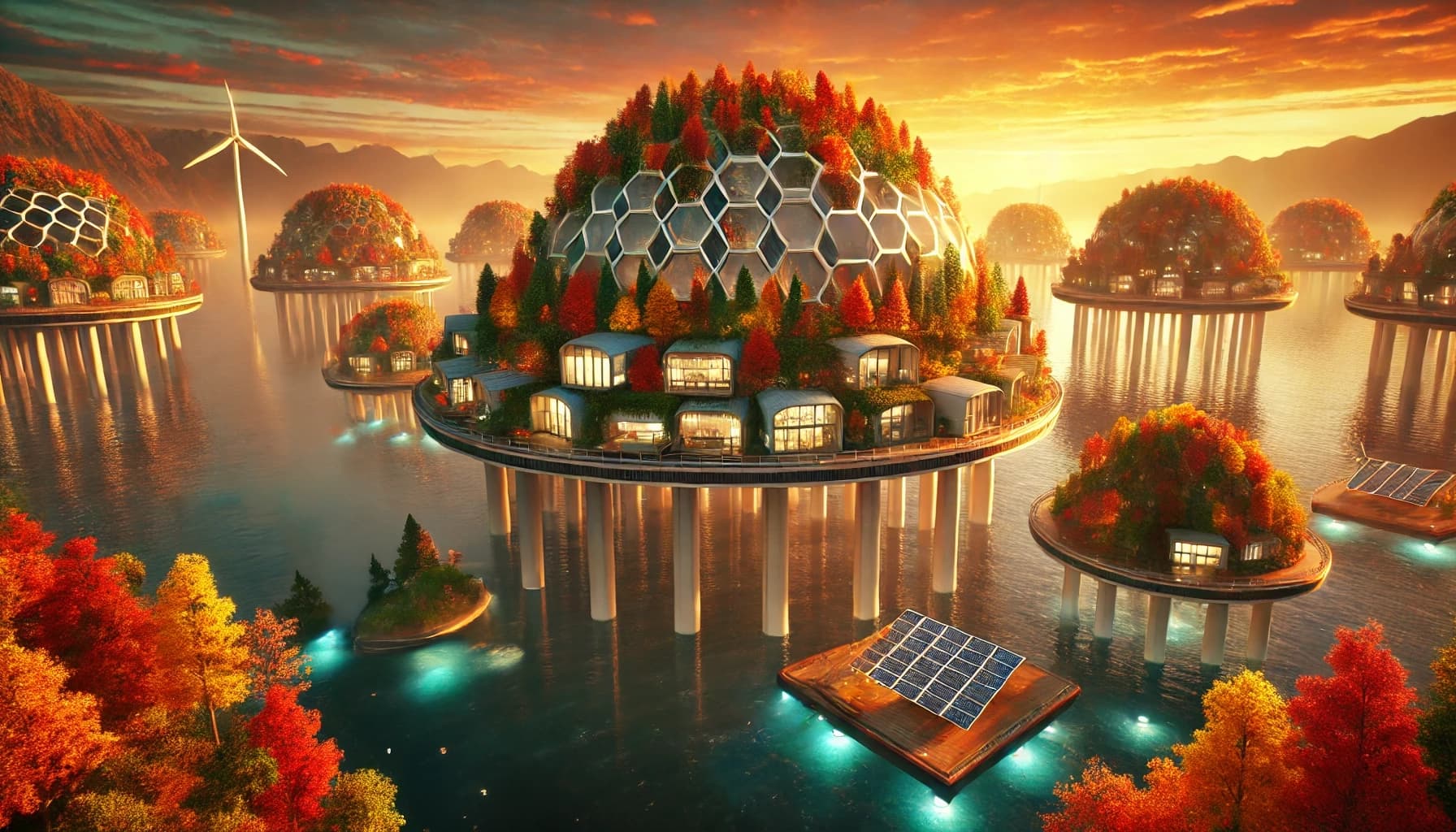
The composition is a single central platform with several smaller satellite islands around it. The central platform sits on tall pillars rising out of a calm lake; its top is covered in a hexagonal-paneled geodesic dome that holds maple trees turning autumn-orange under the sunset light. A wind turbine stands on the leftmost neighboring island. The other satellites carry smaller forests of red-and-orange foliage. The pillars descend into the water, glowing cyan at the waterline.
The specific architectural form — a stilted platform holding a geodesic dome, surrounded by smaller cluster islands — has real precedent. The Eden Project in Cornwall (2001) uses linked geodesic biomes on a former china-clay quarry; Buckminster Fuller designed his original 1960s 'Cloud Nine' floating-dome concept on similar geometric grounds. The image extrapolates: what if the biomes were on a lake instead of a quarry, on stilts instead of grade level, networked instead of clustered?
The autumn palette is the editorial choice. Most floating-eco-city imagery defaults to summer green; this image insists on October. That choice does two things. First, it admits seasonality — these are real trees, growing on what looks like real soil, going through real annual cycles. Many speculative-future images skip this; their forests are perpetually green because the artist never thought about November. Second, it admits that ecological architecture is beautiful at multiple times of year, in different ways. A hexagonal-domed platform full of bare November branches is a different image from this one, but it's a real image, and the artist is implicitly committing to that being beautiful too. Sustainability is a year, not a season.
This image was imported from the original Slaacr library. The DALL-E prompt was not documented at creation time. It's pending regeneration through the Studio's SAE master template — once that happens, the prompt will appear here as a teaching artifact.